

.png)

.png)

.png)


26/08/2026
Nathan Sparkes

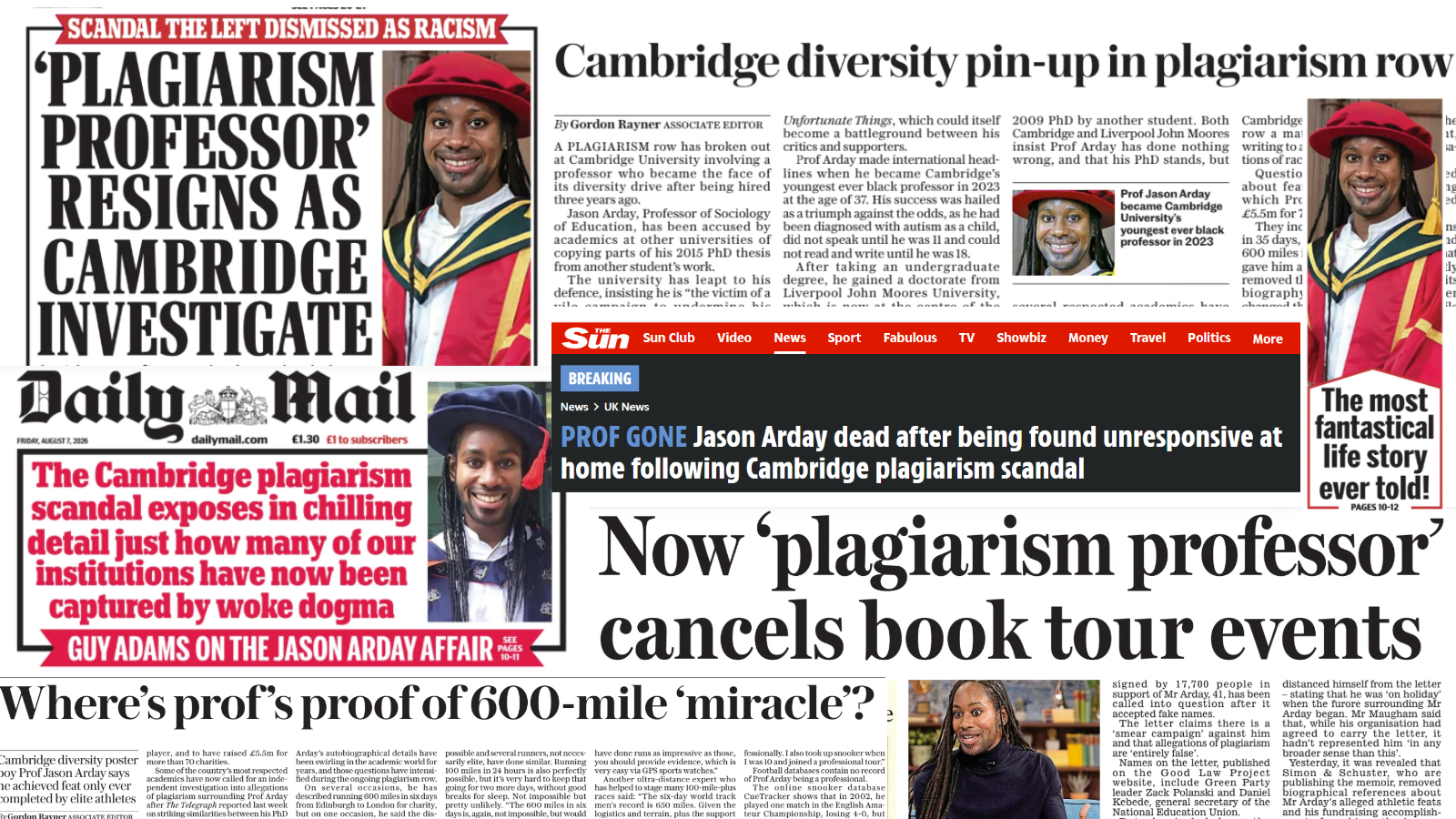
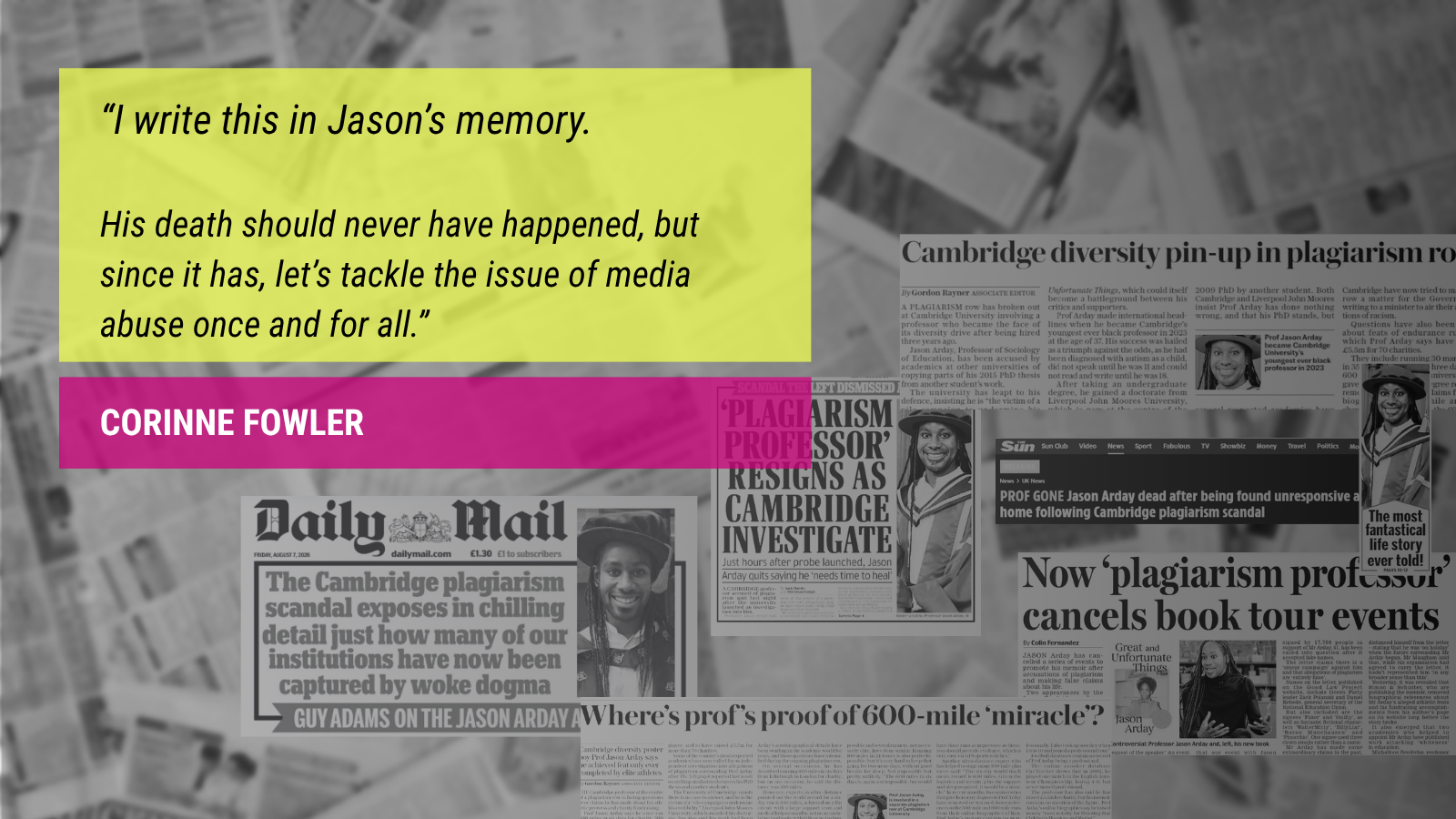
Jason Arday died on August 14th, aged 41. His death followed a fierce campaign of press hostility, in which he was accused of dishonesty over several claims he had made in his personal and professional life.
The accuracy of these allegations is debated, and the recommended Monk Debunks blog has identified at least a few areas in which the press’ claims against Arday fall short.
But the reaction of national newspapers to his death has exposed a brittle defensiveness at the heart of the press, and a determination to remain outside any meaningful form of accountability.
In most industries, if someone had died after being demonised as Arday had been (the press call it “monstering”), there would be a period of introspection: reflection on what might have gone wrong, and what ought to change in the future.
Yet for much of the press, all that has followed Arday’s death has been a period of defensiveness and hypocritical self-justification.
An editorial in the Sunday Times defended the media’s conduct (while shifting blame onto Cambridge University and, as ever, social media), while several articles in both the Sunday Times and The Times – full of apparent regret for his death – nonetheless eagerly defended the media and blamed others.
The Telegraph was more forthright, publishing a Charles Moore column headlined, “The tragedy of Jason Arday can’t be blamed on the press”. Other articles openly criticised and attacked the very prospect of action to address low standards in the press; laying accusations for what happened at the door of the university, academia and others.
In The Spectator, Brendan O’Neill accused campaigners of “turn[ing] its guns on the press” over Arday’s death, while the magazine’s other coverage turned its own guns onto “DEI”.
According to the press, everyone is to blame for Jason Arday’s death – except them.
This week, the ever rational Dan Hodges at the Mail disingenuously compared concerns over the press’ treatment of Jason Arday with Reform politicians’ attempts to dodge legitimate scrutiny. As if there is any parallel between a University professor accused (and cleared) of plagiarism, and politicians in public roles, funded by the taxpayer, who are accused of failing to make proper financial disclosure.
Most extraordinary was a letter which appeared in The Times, signed by a group of national newspaper journalists & their advocates, which again defended the press over its Arday coverage. Generally, the letters page is used to express an alternative or supplementary view on the content of a specific news story or other article in the newspaper. But this letter did not refer to any Times article, and the view it expressed simply repeated the only view The Times has ever published on Jason Arday’s treatment.
It was bizarre but, as we know, if you own or edit a newspaper you can print what you like.
In many of these articles, the view of Hacked Off and other campaigners has been falsely characterised as calling for state censorship. That is always the press reaction to calls for higher standards and independent regulation.
What Hacked Off has called for is an inquiry into the press coverage of Arday, and the introduction of an independent regulator to investigate and adjudicate in cases of alleged journalistic misconduct such as these.
The publications which have been most belligerent in their reaction to public anger over Arday’s death, The Times, The Telegraph and The Spectator, have argued that the press has done nothing wrong in its coverage of Arday. They have done so uniformly and without, that I have seen, a scrap of diversity of opinion or independent thought on the topic.
If that is true, an independent regulator would exonerate the press and an inquiry would similarly find in its favour.
But far from welcoming this prospect, newspapers have aggressively campaigned against it.
That is shameless hypocrisy: they bleat about their right to scrutinise the personal achievements of a resigned university professor, but are appalled that their taxpayer-subsidised, multi-millionaire owned, unregulated newspaper publishers should ever be scrutinised themselves.
We cannot speak for all campaigners and activists but the most high profile calls for action have been considered and proportionate. Someone has died after a relentless press campaign. The very least the public is entitled to is an investigation into the press’ role in these events and an independent body to review complaints against the press in the future.
The press rejection of these modest expectations speaks for itself. The obvious conclusion is that The Times, Telegraph and Spectator resist regulation and the prospect of investigations because their standards are low, and they fear being found out – either in respect of their coverage of Jason Arday, or more generally.
In any case, if anyone still believes that the press in the UK has changed since Leveson; that it has matured, or grown more receptive to public concerns around ethics and accountability, they have their answer. In most cases, it is as hostile and resistant to accountability as ever. And the likes of The Times, The Telegraph, Spectator and others remain unashamed and unable to examine their own conduct even – especially, perhaps – in times of profound tragedy.
Hacked Off is funded by supporters, not newspaper owners. Help us take this to Parliament: give £10 a month.
Give £10 a monthBy submitting your details you agree to receive email updates about the campaign. We will always keep your data safe and you may unsubscribe at any time.
.png)
.png)