

.png)

.png)

.png)


19/01/2026
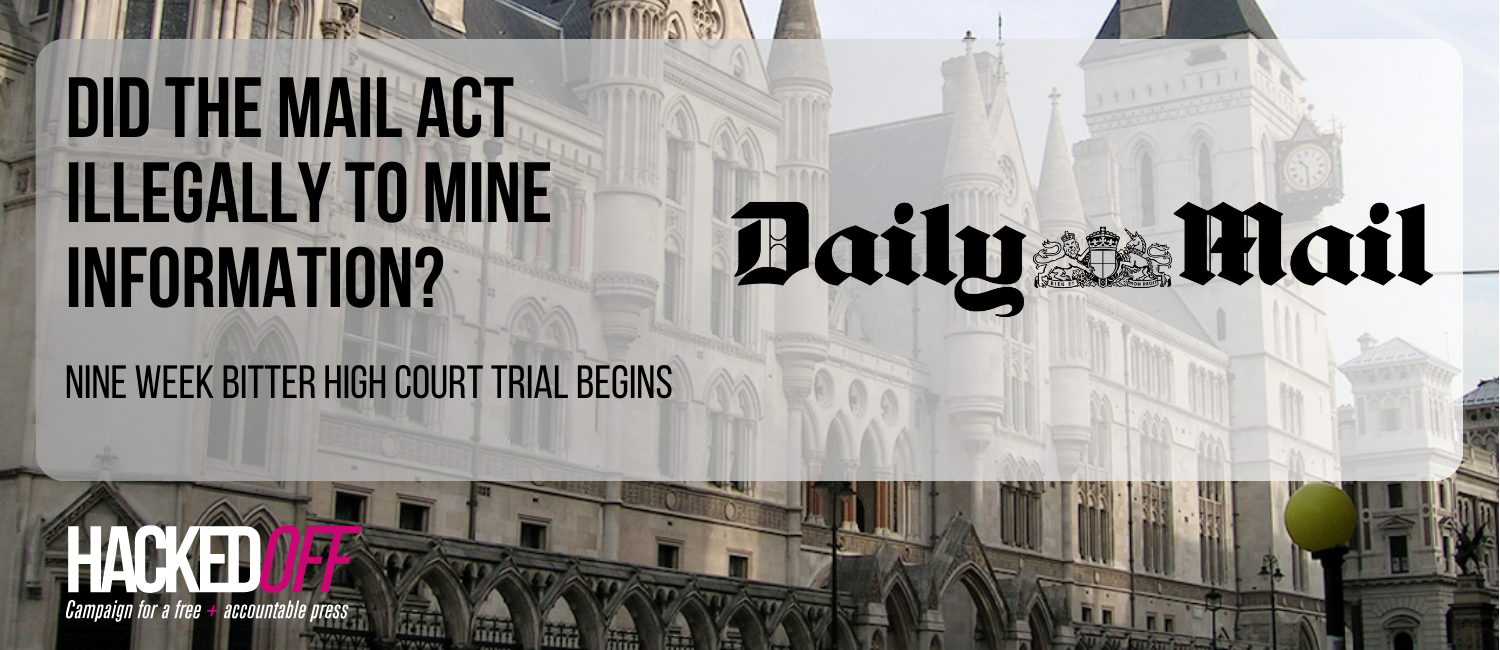
A group of seven high profile claimants including Prince Harry have lodged a trial skeleton argument accusing Associated Newspapers Limited (ANL), publisher of the Daily Mail and Mail on Sunday, of widespread ‘unlawful information gathering’ said to have occurred from the early 1990s to 2011, with allegations continuing later in some respects. The claims are listed for trial in the King’s Bench Division (Media andCommunications List) before Mr Justice Nicklin in a window running from January to March 2026. Associated Newspapers deny all allegations.
The claimants are Baroness Lawrence of Clarendon, Elizabeth Hurley, Sir Elton John and David Furnish, Sir Simon Hughes, Prince Harry (the Duke of Sussex), and Sadie Frost Law. In broad terms, they allege their private information was obtained through methods including voicemail interception, listening to live calls, deception (‘blagging’) to obtain confidential data such as medical or billing information, and the use of private investigators and intermediaries to conduct the work. The journalists accused of illegal practices claim they had normal legal sources from which the information was gathered.
In their filed argument, the claimants say the case can be proved through a combination of contemporaneous documents and patterns of conduct, even where time and document loss means there is no single ‘smoking gun’. They refer to notebooks, invoices, payment trails, and communications said to connect journalists and executives to private investigators and to information later appearing in published stories. The named journalists from the newspaper refute this.
David Sherbourne, representing the claimants, referring to these documents in his opening, told the court, “What is beyond doubt, we say is that there is indisputable evidence” senior people were aware of unlawful information gathering and this was “no clean ship.” He told the court there were a “huge number of missing invoices” and “masses” of missing documents, and asked Judge Nicklin to be mindful of this when considering the case. The alleged unlawful activity by private investigators was carried out at costs of more than £3million, Sherbourne added. The Mail deny services were paid for to obtain such material from private investigators,
Specific example: Sadie Frost pregnancy and termination information
One of the more detailed examples highlighted concerns Sadie Frost’s allegation that the Mail on Sunday sought to exploit sensitive medical information relating to a pregnancy and termination in 2003.In the section dealing with an ‘ectopic pregnancy episode’, the skeleton saysFrost discovered she was pregnant in September 2003, that the pregnancy wasectopic, and that she underwent a termination at St John and Elizabeth Hospital in London. It says she did not tell her sisters or mother, and believed only avery small circle knew. ANL deny obtaining this information by covert orillegal means.
The legal team representing Miss Frost argues that contemporaneous notes attributed to journalist Katie Nicholl recorded intimate details including the pregnancy, hospital, and other highly specific information. It says the notes include a margin reference to ‘Susie’ (described as linked to ELI/TDI/BDI) alongside lines stating Frost ‘is pregnant’, and record other private details such as the identity of her doctor. The claimants say payments were made days later to ELI for work described on invoices as ‘KATIE NICHOLLS URGENT ENQ’ and ‘K NICHOLLS SEARCHES’, and they argue this supports an inference that unlawful methods were used to obtain the information.
The skeleton notes the episode did not result in a published article, and says it was pleaded after disclosure of an Atex draft.It frames the dispute for the court as how such information was obtained, withFrost alleging unlawful information gathering, and Nicholl contending it was lawfully sourced.
Specific example: Chelsy Davy airline seat and flight details
The Duke of Sussex’s section of the skeleton also points to allegations involving the sourcing of airline information about his former girlfriend Chelsy Davy, including seat and flight details, which the claimants say carried significant security implications.
In one passage, the skeleton refers to an emails aid to show journalist Rebecca English receiving Davy’s ‘exact flight details and seat number’ for a journey to South Africa, with a suggestion to ‘plant someone next to her’. The claimants say there was a £200 payment linked to the episode, and assert that the level of detail could not realistically have been obtained by lawful means, particularly given the Duke’s evidence that he flew under a pseudonym and that such travel details were not being shared.
Elsewhere, the skeleton cites emails in which aMail journalist refers to obtaining information about ‘Harry’s first love ’being on a particular flight, and a further email stating a ‘contact at British Airways’ had been offered money in return for a name. The claimants argue these communications point to unlawfully obtained information from an airline source. ANL deny these allegations.
The limitation dispute
ANL’s principal defence, as summarised in the skeleton, is limitation. The publisher is said to argue that the claims are brought too late and should be struck out because the claimants could, with reasonable diligence, have discovered the alleged wrongdoing years earlier.
The claimants rely on section 32 of the Limitation Act 1980, contending there was deliberate concealment and that each claimant’s knowledge crystallised at a later point. The skeleton references what it describes as ‘public denials’ by ANL and argues it is inconsistent to deny wrongdoing while simultaneously asserting claimants should have uncovered it long ago. It also points to disclosure said to show internal investigations and substantial spending on private investigators across the relevant period.
What happens next?
The January to March 2026 trial window will determine whether the court finds that the alleged unlawful acts occurred, whether the claims are time-barred, and, if liability is established, what damages are payable. The claimants say they will seek substantial damages, including aggravated damages, reflecting the alleged intrusions and their claimed impact.
Associated Newspapers deny all the allegations, describing them as “preposterous smears.”
By submitting your details you agree to receive email updates about the campaign. We will always keep your data safe and you may unsubscribe at any time.

.png)